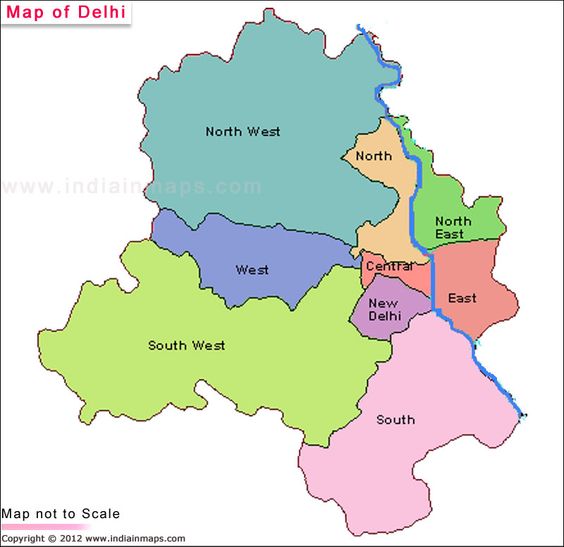
The climate of Delhi is characterized by extreme dryness, with intensely hot summers. It is associated with a general prevalence of continental air, which moves in from the west or northwest, except during the season of the monsoon, when an easterly to southeasterly influx of oceanic air brings rain and increased humidity. The summer season lasts from mid-March to the end of June, with maximum temperatures typically reaching about 100 °F (about 37 °C) and minimum temperatures falling into the high 70s F (about 25 °C); it is characterized by frequent thunderstorms and squalls, especially in April and May. The monsoon season normally begins in July and continues until the end of September. It is during these months that Delhi receives the bulk of its rainfall—roughly 23 inches (600 mm), or nearly three-fourths of the annual average. October and November constitute a transition period from monsoon to winter conditions. The dry winter season extends from late November to mid-March. The coldest month is January, with high temperatures in the low 70s F (about 21 °C) and low temperatures in the mid-40s F (about 7 °C).
The city plan of Delhi is a mixture of old and new road patterns. The street network of Old Delhi reflects the
defense needs of an earlier era, with a few transverse streets leading from one major gate to another.
Occasionally a street from a subsidiary gate leads directly to the main axes, but most Old Delhi streets tend to
be irregular in direction, length, and width. Narrow and winding paths, culs-de-sac, alleys, and byways form an
intricate matrix that renders much of Old Delhi accessible only to pedestrian traffic. Conversely, the Civil
Lines (residential areas originally built by the British for senior officers) in the north and New Delhi in the
south embody an element of relative openness, characterized by green grass, trees, and a sense of order.
When the decision was made in 1911 to transfer the capital of British India from Calcutta (now Kolkata) to
Delhi, a planning committee was formed, and a site 3 miles (5 km) south of the existing city of Delhi, around
Raisina Hill, was chosen for the new administrative centre. A well-drained, healthy area between the Delhi Ridge
and the Yamuna River, it provided ample room for expansion. Raisina Hill, commanding a view of the entire area,
stood about 50 feet (15 metres) above the plain, but the top 20 feet (6 metres) were blasted off to make a level
plateau for the major government buildings and to fill in depressions. With this low acropolis as the focus, the
plan for New Delhi was laid out.
The New Delhi plan was characterized by wide straight avenues, with trees in double rows on either side, that
connected various points of interest and provided vistas of the surrounding area. The most prominent feature of
the plan, aside from its diagonal road pattern, was the Rajpath, a broad central avenue that in present-day New
Delhi stretches westward from the National Stadium, through the All India War Memorial arch (popularly called
the India Gate), to the Central Secretariat buildings and the Presidential House (Rashtrapati Bhavan). This is
the main east-west axis; it divides New Delhi into two parts, with a large shopping and business district,
Connaught Place, in the north and extensive residential areas in the south
In the demographic history of Delhi, a turning point was the year 1947, when thousands of Hindu and Sikh
refugees
from predominantly Muslim Pakistan entered the city in the wake of India’s independence. Since that time the
population has grown steadily, with an ongoing heavy flow of immigrants, most arriving from other Indian states
or
from adjacent countries.
Immigrant (or other foreign) communities often are found in the newer housing developments. Chanakyapuri (more
commonly known as the Diplomatic Enclave), for instance, is the site of many foreign embassies. Concentrations
of
specific ethnic communities have formed in such areas as Chittaranjan Park and Karol Bagh; the former is a
predominantly Bengali subdivision and the latter largely a Punjabi one. Such areas have been diversifying since
the
late 20th century, however.
The religious composition of Delhi’s population is also varied. The great majority of the residents are Hindu.
Adherents of Islam constitute the largest minority, followed by smaller numbers of Sikhs, Jains, Christians, and
Buddhists.
The service sector is the most important part of Delhi’s economy, and it is the city’s largest employer.
Manufacturing has remained significant, after a surge in the 1980s. Agriculture once contributed significantly
to the economy of the national capital territory, but now it is of little importance.
The bulk of Delhi’s working population is engaged in trade, finance, public administration, professional
services, and various community, personal, and social services. Indeed, for many centuries Old Delhi has been a
dominant trading and commercial centre in northern India. Since the 1990s New Delhi has emerged as an important
node in the international corporate and financial network.
Delhi’s position as the national capital and as a major industrial city has supported its function as a banking, wholesale-trade, and distribution centre. The city is the headquarters of the Reserve Bank of India and of the regional offices of the State Bank of India and other banking institutions. Many foreign banks offering both retail and corporate services also have branches in the city. Delhi is a divisional headquarters for the insurance business and is the home of the Delhi Stock Exchange. The city has long acted as a major distribution centre for much of northern India, with a large proportion of the trade conducted from within the Old Delhi area, where most of the markets are concentrated. In addition to its financial and trade services, Delhi hosts a thriving tourism industry, which has grown rapidly since the late 20th century.
Mechanized industry arrived in Delhi early in the 20th century and focused on cotton ginning, spinning, and
weaving; flour grinding and packaging; and sugarcane and oil pressing. More recently, electronics and
engineering goods, automobile parts, precision instruments, machinery, and electrical appliances have moved to
the centre of the city’s manufacturing activities, although the production of apparel, sports-related products,
and leather goods is also important.
Delhi long has been renowned for its handmade artistic works, such as ivory carvings and paintings, engravings,
sculpture of various sorts, miniature paintings, jewelry, gold and silver brocades and embroidery, and
metalwork. Such items remain a small but significant segment of Delhi’s manufacturing sector
The geographic position of Delhi on the great plain of India, where the Deccan plateau and the Thar Desert
approach the Himalayas to produce a narrow corridor, ensures that all land routes from northwestern India to the
eastern plain must pass through it, thus making it a pivotal centre in the subcontinent’s transportation
network. A number of national highways converge on Delhi, and several railway lines also meet there, linking the
city with all parts of the country. Delhi is an important air terminus in northern India for both international
and domestic services. Indira Gandhi International Airport, located in the southwestern part of the city,
handles international flights. One of its terminals, which was once known as the Palam Airport, lies about 2
miles (3 km) from the international facility and is a hub of the domestic airway system
The traffic-circulation pattern of Delhi was originally designed for a smaller population, and, with Delhi’s
explosive growth, the system quickly became overburdened. Improvements to the road system—such as adding
overpasses and underpasses and widening major thoroughfares—have alleviated the worst traffic congestion, but
the sheer volume of traffic—which includes slow-moving vehicles such as bullock carts, pedicabs, and
bicycles—makes road travel in Delhi difficult. Although they are improving, mass-transportation facilities
remain inadequate, with the principal means of public transport consisting of an ever-increasing fleet of buses.
Long-distance commuting within the city is facilitated by chartered buses during rush hours, as well as by a
rapid transit system, the first phase of which was completed in November 2006. Several bridges built in the late
20th and early 21st centuries have helped to ease the flow of traffic over the Yamuna River
Delhi was a British province headed by a chief commissioner until 1947, when India attained its independence. It
became a centrally administered state in 1952, but in 1956 its status was changed to that of a union territory
under the central government. A unified corporation for both urban and rural areas was established in 1958, and
Delhi was designated the national capital territory in 1991. A lieutenant governor, appointed by the president
of India, is the chief administrator of the national capital territory; he is assisted by a chief minister, who
also is appointed.
Nested in different layers of administrative and planning regions, Delhi consists of both the urban
agglomeration and more than 200 villages distributed mostly across the Delhi and Mehrauli tehsils (subdistricts)
of the territory. At the macro level, Delhi is part of the National Capital Region (NCR), a planning region
carved out in 1971 by the Town and Country Planning Organisation to guide future growth around Delhi. The NCR
comprises not only Delhi but also the bordering tehsils in the states of Haryana, Uttar Pradesh, and Rajasthan.
At the micro level is the national capital territory itself, which consists of three administrative bodies known
locally as statutory towns—the Municipal Corporation of Delhi (MCD), the New Delhi Municipal Council (NDMC), and
the Cantonment Board—that are in some ways distinguished by function and in other ways by the geographic area
over which they have authority. The MCD, which is an elected body, performs municipal and discretionary welfare
functions, a foremost focus of which has been the elimination of substandard housing (either through destruction
or improvement). The NDMC, which is an appointed body, is essentially responsible for New Delhi and its
adjoining areas. The Cantonment Board consists of both elected members and appointed ex officio members; among
its principal responsibilities are water and public-utilities management, public health and sanitation, birth
and death registration, and elementary education.
Delhi’s water and electricity are provided by various public and private companies. The Delhi Jal Board
distributes treated drinkable water. Electricity is supplied largely by local coal-burning thermal stations,
although several gas-fired plants, built in the national capital territory in the early 21st century, also
generate a significant amount of power. A portion of Delhi’s energy is tapped from sources outside the national
capital territory.
The jurisdiction of the Delhi Fire Service extends over both the urban and rural areas of the national capital
territory. The Delhi Police force is headed by a commissioner who oversees the operation of several districts,
each of which is administered by a superintendent of police. Scattered across these districts are well over 100
police stations, which are responsible for regular patrol in their respective areas.
Overall health standards in Delhi exceed the national average, but the accessibility of health care facilities
varies widely. Much of the city’s health care is provided by a large number of allopathic and homeopathic
clinics, as well as by dispensaries of various indigenous medical treatments (most of which are based on herbs
and minerals). Hospitals in Delhi are numerous; many of the larger facilities are administered by the national
government or by the national capital territory.
The growth of the school system in the national capital territory generally has kept pace with the expansion of
the city’s population. Primary-level education is nearly universal, and a large proportion of students also
attend secondary school. The national boards for secondary education are located in Delhi.
There are many institutions of higher education in the national capital territory, the most prominent of which
include the Jamia Millia Islamia (1920); the University of Delhi (1922), which has many affiliated colleges and
research institutions; and Jawaharlal Nehru University (1969). Among the major colleges for professional and
other studies are the All India Institute of Medical Sciences (1956), the National School of Drama (1959), the
Indian Institute of Technology (1959), and the Indian Institute of Mass Communications (1965). One of the
largest distance-learning universities in India, Indira Gandhi National Open University (1985), is also located
in Delhi. In addition to these major institutions, an array of vocational schools offer a wide variety of
courses.
Delhi’s cultural life exhibits a unique blend of the traditional and cosmopolitan styles. The city is dotted
with numerous museums, historic forts and monuments, libraries, auditoriums, botanical gardens, and places of
worship. Complementing such traditional institutions are the ever-changing urban commercial and leisure centres,
with their privately held contemporary art galleries, cinema multiplexes, bowling alleys and other sports
venues, and restaurants serving a variety of Indian and international cuisines.
Also reflecting Delhi’s cultural and stylistic diversity are its numerous fairs and festivals. These include an
annual film festival as well as many sorts of trade and book fairs. The various religious groups in Delhi
contribute to an ongoing succession of religious festivals and celebrations.
A varied history has left behind a rich architectural heritage in Delhi. The oldest buildings in the city belong
to the early Muslim period; they are not homogenous in construction or in ornamentation, however. The influence
of Hindu Rajput craftsmen is visible in the naturalistic motifs, the serpentine tendrils, and even the curves of
the alphabets of Qurʾānic inscriptions. Some artists, poets, and architects from Central Asia brought with them
the Seljuq (Turkish) tradition of architecture, characterized by a lotus-bud fringe on the underside of arches,
ornamental reliefs, and bricks laid endwise and lengthwise in alternating courses in the masonry face.
By the time of the Khaljīs (1290–1320), a specific method and idiom, called the Pashtun style, had been
established in Islamic architecture. Among the typical features of this style are red sandstone surfaces with
white marble inlays, arches in the shape of a pointed horseshoe, windows fitted with perforated screens, and
intricate and abundant decoration with arabesques and inspirational texts. Examples of early Pashtun
architecture in Delhi include the Quwat-ul-Islam mosque; the Qutb Minar, which, with its surrounding monuments,
has been designated a UNESCO World Heritage site; the tomb of Iltutmish; and the Alaʾi Gate. Later Pashtun
styles are represented by the tombs of the Sayyid (1414–51) and Lodī kings (1451–1526); these tombs exhibit
either a low octagonal shape or a higher square edifice, the facade of which is broken by a horizontal
decorative band and a series of panels that suggest a much larger structure.
The first important piece of Mughal architecture in Delhi was Humāyūn’s tomb, which was the precursor of the Taj
Mahal (in Agra). It introduced high arches and double domes to Indian architecture. Some of the finest
representatives of later Mughal architecture are found within the Red Fort (Lal Qila). The fort’s massive red
sandstone walls, which stand 75 feet (23 metres) high, enclose a complex of palaces and entertainment halls,
projecting balconies, baths and indoor canals, and geometrical gardens, as well as an ornate mosque. Among the
most famous structures of the complex are the Hall of Public Audience (Diwan-i-Am), which has 60 red sandstone
pillars supporting a flat roof, and the smaller Hall of Private Audience (Diwan-i-Khas), with a pavilion of
white marble. The Jama Masjid is a fine example of a true Mughal mosque, in part because it has minarets, where
its precursors did not. Both Humāyūn’s tomb and the Red Fort complex are UNESCO World Heritage sites.
Stepwells (vans, or baolis) also showcase Delhi’s rich architectural heritage. The subterranean edifices—common
throughout India as water sources for drinking, washing, bathing, and irrigation and as cool sanctuaries for
caravans, pilgrims and travelers—were commissioned by royal, wealthy, or powerful patrons. The structures were
complex engineering feats and distinctive examples of both Hindu and Islamic architectural styles. They were
excavated several stories underground in order to access fluctuating water tables. Although each stepwell varies
stylistically, all of them incorporated flights of stairs leading from the surface to the water. Many also
functioned as inverted temples, featuring column-supported shade pavilions and elaborate stone carvings. Two
stepwell examples in Delhi are Agrasen ki Baoli and Gandhak ki Baoli.
The architectural styles of the British period combined British colonial and Mughal elements. Structures ranged
from the grand—as represented by the Presidential House (Rashtrapati Bhavan) and the Parliament and Secretariat
buildings—to the utilitarian, as seen in the bungalows and institutional buildings. Since independence India has
aimed to develop its own architectural language in a synthesis between Western and local styles. In Delhi
examples of such architecture can be seen in the Supreme Court building, the Vigyan Bhavan (a conference
centre), the Crafts Museum, offices of the various ministries, and the institutional buildings near Connaught
Place. Since the late 20th century, a number of Indian and foreign architects have added buildings to the city’s
landscape that may be considered postmodern (mixing many elements of diverse origin) in style. Notable among
these are the National Institute of Immunology, the headquarters of the Life Insurance Corporation of India, the
building of the Embassy of Belgium, and the Indian Bahāʾī Temple.
Delhi is home to a number of important museums and busy cultural centres. The National Museum of India, the
National Gallery of Modern Arts, and the Indira Gandhi National Centre for the Arts are all dedicated to the
preservation, documentation, and dissemination of the country’s artistic heritage. The Crafts Museum showcases
Indian carving, metalwork, painting, and other crafts; the institution regularly hosts events at which local
craftspeople demonstrate their art and sell their wares. The Siri Fort Auditorium is an important centre for
major cultural events. The Pragati Maidan, a world-class trade and cultural centre, is another prominent
landmark where events and exhibitions of international scale are held throughout the year. Dilli Haat is a
popular bazaar that offers a diverse range of handicrafts and cuisines from the various states.
Aside from its museums, auditoriums, and other cultural centres, Delhi is a city of gardens and fountains, among
the most notable of which are the Roshan Ara Gardens and the meticulously planned Mughal Gardens. Many park and
garden areas have grown up around historical monuments, such as the Lodī Gardens (around the Lodī Tombs) and the
Firoz Shah Kotla Grounds (around Ashoka’s Pillar). Along the Yamuna riverfront, memorials set in flowering
gardens have been built for various 20th-century national leaders. Among these are Raj Ghat (honouring Mahatma
Gandhi), Shanti Vana (honouring Jawaharlal Nehru), and Vijay Ghat (honouring Lal Bahadur Shastri.
The national capital territory has well-developed sporting facilities, including a number of stadiums that were built when Delhi hosted the Asian Games in 1982. Several sports complexes are located within the city, while world-class golf courses are situated on its periphery. Among the major outdoor natural recreation areas are the Delhi Ridge and the Yamuna riverfront.
Delhi is an important centre for publishing, the press, and other mass communications. Doordarshan, the country’s national television network, and All India Radio are both headquartered there. Major daily newspapers issued from Delhi include The Times of India and the Hindustan Times.