Rajasthan has a wide range of climate that varies from extremely arid to humid. The humid zone spans the southeast and east. Except in the hills, the heat during the summer is intense everywhere, with temperatures in June—the warmest month—typically rising from the mid-80s F (about 30 °C) to nearly 110 °F (low 40s C) daily. Hot winds and dust storms occur in the summer, especially in the desert tract. In January—the coolest of the winter months—daily maximum temperatures range from the upper 60s to the mid-70s F (low to mid-20s C), while minimum temperatures are generally in the mid-40s F (about 7 °C). The western desert has little rain, averaging about 4 inches (100 mm) annually. In the southeast, however, some areas may receive almost 20 inches (500 mm). Southeastern Rajasthan benefits from both the Arabian Sea and Bay of Bengal branches of the southwest (summer) monsoon winds, which bring the bulk of the annual rainfall.
The predominant vegetation of Rajasthan is scrub jungle. Toward the west there are typical arid-zone plants,
such as tamarisk (genus Tamarix) and false tamarisk (genus Myricaria). Trees are scarce, limited mostly to
small, scattered forest areas in the Aravallis and in the eastern part of the state. Less than 10 percent of
Rajasthan is under forest cover.
A number of notable large mammals are regular residents of Rajasthan. Tigers are found primarily in the
Aravallis. Leopards, sloth bears, Indian sambar (dark brown Indian deer), and chital (spotted deer) occur in
the hills and forests. Nilgais (bluebucks; large antelope) are also found in parts, and blackbucks are
numerous in the plains. Common birds include snipes, quail, partridges, and wild ducks; they occur
everywhere except in the desert. The northwestern part of the state is well known for several species of
sandgrouse.
Numerous sanctuaries and wildlife parks have been established in the state. Among the most important of
those are Sariska National Park (established 1955), near Alwar in the northeast; Desert National Park
(1980), near Jaisalmer in western Rajasthan; and Keoladeo Ghana National Park (1981), in the eastern part of
the state near Bharatpur—the latter designated a UNESCO World Heritage site in 1985.
Most of Rajasthan’s population consists of Indians of various social, occupational, and religious
backgrounds. The Rajputs (various clans of landowning rulers and their descendants), though representing
only a small percentage of Rajasthan’s residents, are perhaps the most-notable section of the population;
indeed, the state draws its name from that community. In terms of caste structure, the Brahmans (highest
caste) are subdivided into many gotras (lineages), while the Mahajans (trading caste) are subdivided into a
bewildering number of groups. In the north and west the Jats (peasant caste) and Gujars (herding caste) are
among the largest agricultural communities.
Aboriginal (tribal) peoples constitute more than one-tenth of the population of Rajasthan. In the eastern
part of the state, those groups include the Mina (and the related Meo), most of whom are farmers; the
Banjara, who have been known as traveling traders and artisans; and the Gadia Lohar, another historically
itinerant tribe, who traditionally have made and repaired agricultural and household implements. The Bhil,
one of the oldest communities in India, generally inhabit southern Rajasthan and have a history of
possessing great skill in archery. The Grasia and Kathodi also largely live in the south, mostly in the
Mewar region. Sahariya communities are found in the southeast, and the Rabari, who traditionally are cattle
breeders, live to the west of the Aravallis in west-central Rajasthan.
Hindi is the official language of the state, and to some degree it has overshadowed the local languages of
Rajasthan. Much of the state’s population, however, continues to speak Rajasthani languages, which comprise
a group of Indo-Aryan languages and dialects derived from Dingal, a tongue in which bards once sang of the
glories of their masters. The four main Rajasthani language groups are Marwari in western Rajasthan, Jaipuri
or Dhundhari in the east and southeast, Malvi in the southeast, and in the northeast Mewati, which shades
off into Braj Bhasa (a Hindi dialect) toward the border with Uttar Pradesh.
Hinduism, the religion of the vast majority of the population, is generally practiced through the worship of
Brahma, Shiva, Shakti, Vishnu, and other deities. The town of Nathdwara, in southern Rajasthan, is an
important religious centre for the Vallabhacharya school of Krishna worshippers. There are also followers of
Arya Samaj, a type of reformed Hinduism that stems from the late 19th century.
Islam, the state’s second largest religious community, expanded in Rajasthan with the conquest of the city
of Ajmer and the surrounding area by Muslim invaders in the late 12th century. Khwājah Muʿīn al-Dīn Chishtī,
the Muslim missionary and mystic, had his headquarters at Ajmer, and Muslim traders, craftsmen, and soldiers
settled there.
Jainism is also important; it has not been the religion of the rulers of Rajasthan but has followers among
the trading class and the wealthy section of society. The towns and temples of Mahavirji, Ranakpur, Dhulev,
and Karera are the chief centres of Jain pilgrimage. Another important religious community is formed by the
Dadupanthis, the followers of the 16th-century saint Dadu, who preached the equality of all people, strict
vegetarianism, total abstinence from intoxicating beverages, and lifelong celibacy. The state also has small
populations of Christians and Sikhs.
Rajasthan is one of the least densely populated states in India, with roughly three-fourths of its residents
living in rural settlements. Traditional rural houses are huts with mud walls and roofs thatched with straw.
They have a single door but no windows or ventilators. The houses of more-affluent farmers and artisans in
larger villages have more than one room. They are roofed with tiles and have a veranda and large courtyard,
whose main door will admit a loaded bull cart. The earthen floors are coated with mud and dung.
The state’s urban population has grown faster than the rural population since the late 20th century. Jaipur
is by far the largest city of Rajasthan. Other major urban centres include Jodhpur, Kota, Bikaner, Ajmer,
and Udaipur. With the exception of Jodhpur and Bikaner, all lie to the east of the Aravalli Range4
The agricultural sector has long been the mainstay of Rajasthan’s economy. It accounts for about one-fourth
of the state’s economic output, employing about two-thirds of the state’s working population. Despite scant
and scattered rainfall, nearly all types of crops are grown, including pearl millet in the desert area,
sorghum around Kota, and mainly corn (maize) around Udaipur. Wheat and barley are fairly well distributed
(except in the desert area), as are pulses (such as peas, beans, and lentils), sugarcane, and oilseeds. Rice
is grown in the irrigated areas of both the southeast and the northwest. Cotton and tobacco are important
cash crops. Rajasthan has a large livestock population and is a major wool-producing state. It also is a
source of camels and draft animals of various breeds.
Rajasthan needs extensive irrigation to be agriculturally productive. The state receives much water from the
rivers of Punjab, from the Western Yamuna Canal in Haryana and the Agra Canal in Uttar Pradesh, and from the
Sabarmati and Narmada Sagar projects in Gujarat and Madhya Pradesh, respectively. Desert land in
northwestern and western Rajasthan is irrigated by the Indira Gandhi Canal (formerly called the Rajasthan
Canal), which carries water some 400 miles (640 km) from the Beas and Sutlej rivers in Punjab. Rajasthan
shares the Bhakra Nangal project with Punjab and Haryana and the Chambal Valley project with Madhya Pradesh;
both are used to supply water for irrigation and for drinking purposes
Rajasthan is an important producer of lead and zinc concentrates, emeralds, and garnets. A major portion of
the country’s gypsum and silver ore also are produced in Rajasthan. Electricity supplies are obtained mostly
from neighbouring states and from the Chambal Valley project. Power is generated primarily from
hydroelectric stations and gas-fired thermal plants. The state also draws a portion of its energy from wind
farms and from a nuclear power plant at Rawatbhata, southwest of Kota.
The service sector has grown substantially in importance since the late 20th century to constitute about half the value of the state’s economy. Notable has been the increase in tourism, visitors being drawn by Rajasthan’s large number of historical sites and natural areas.
The structure of Rajasthan’s government, like that of most other states in India, is determined by the
national constitution of 1950. The head of state is the governor, who is appointed by the president of India
for a five-year term. The governor is aided and advised by the Council of Ministers, which is headed by a
chief minister and is responsible to the unicameral Legislative Assembly (Vidhan Sabha); members are elected
by universal adult franchise, although some seats are reserved for representatives of tribal groups
(Scheduled Tribes) and other traditionally disadvantaged communities (Scheduled Castes).
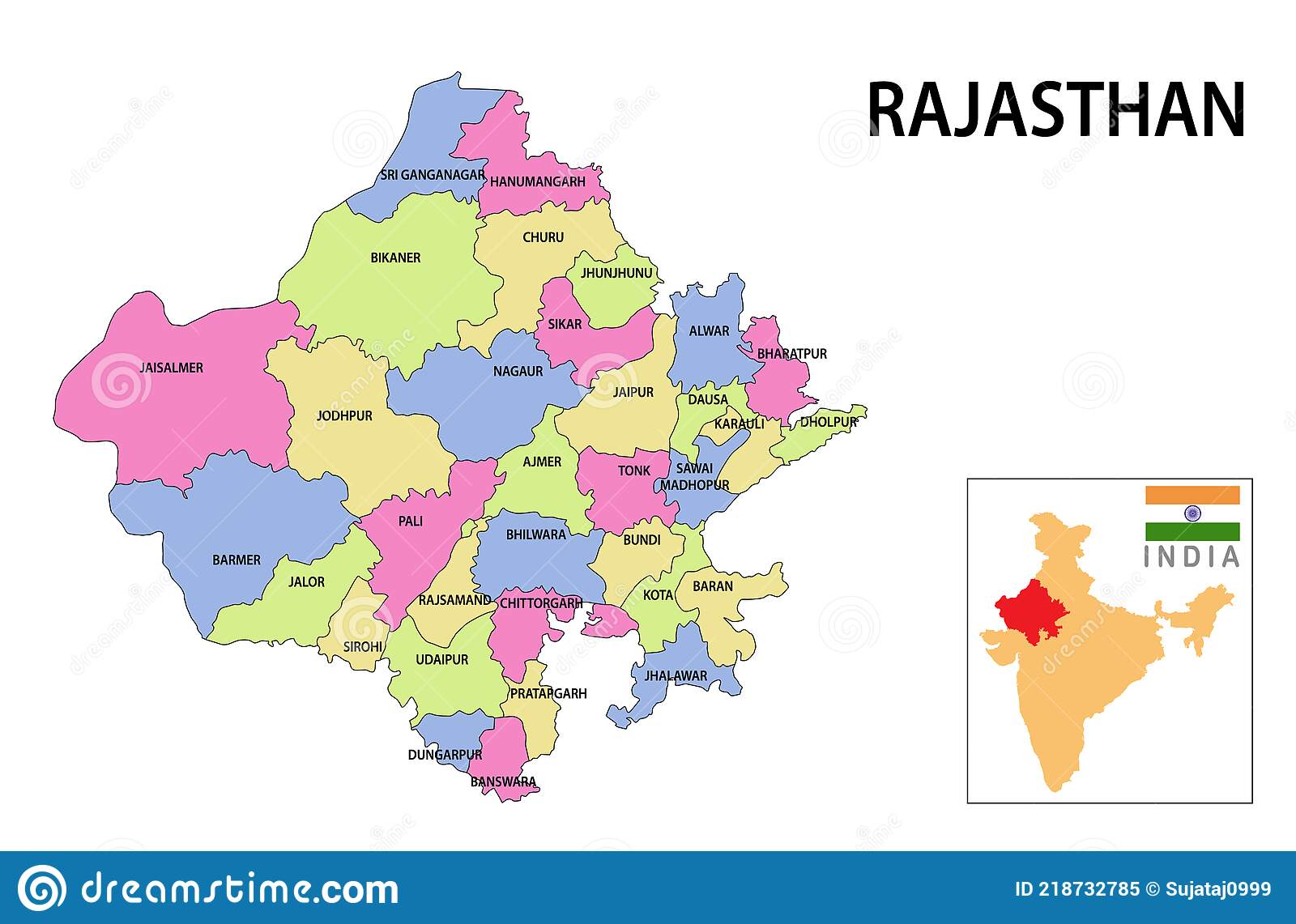
The state is divided into more than 30 districts. In each district the collector, who is also the district
magistrate, is the principal representative of the administration. The collector functions in close
cooperation with the superintendent of police to maintain law and order in the district and serves as the
principal revenue officer. For administrative purposes, each district is split into a few subdivisions,
which are divided into smaller units called tehsils, which, in turn, contain a number of villages.
Rajasthan was the first state to experiment at the village level with panchayat raj (rule by panchayat, or
village council), having enacted in 1959 the legislation necessary to implement that bold experiment in
democratic decentralization. The system, embracing the concepts of the importance of traditional village
institutions in Indian society espoused by Mohandas (Mahatma) Gandhi, created within the state three levels
of local government based on elected village panchayats. Villages were grouped into administrative units
called community development blocks, each having a panchayat samiti (block council) composed of the chairmen
of the panchayats, appointees, and ex officio members. There were also district-level councils (zila
parishads), composed of the chairmen of the panchayat samitis, along with representatives of
special-interest groups (such as women and disadvantaged social classes) and local members of the state and
national legislatures. The key level in the organization was the community development block, which was
assigned the responsibility of planning and implementing a wide range of community and development programs.
Panchayat raj initially achieved a considerable measure of success, but, with increasing politicization of
the system and conflicting interests with state-level development agencies, the system became less
effective.
Rajasthan has many hospitals and dispensaries specializing in allopathic (Western) medicine as well as
numerous institutions offering Ayurvedic (traditional Indian), Unani (a system using medicines derived from
herbal, mineral, and animal sources), and homeopathic treatment. The state participates in the major
national health programs to control tuberculosis, various vector-borne diseases, leprosy, iodine deficiency,
and blindness.
There are a number of institutions of higher education in Rajasthan. State universities are located in
Jaipur, Udaipur, Jodhpur, Bikaner, and Ajmer. Other prominent institutions include Vardhman Mahaveer Open
University in Kota and the Birla Institute of Technology and Science in Pilani.
Cultural life in Rajasthan is characterized by numerous religious festivals. Among the most popular of those celebrations is the Gangaur festival, during which clay images of Mahadevi and Parvati (representing the benevolent aspects of the Hindu mother goddess) are worshipped by women of all castes for 15 days and are then taken out to be immersed in water. Another important festival, held at Pushkar near Ajmer, takes the form of a mixed religious festival and livestock fair; Hindu pilgrims come seeking salvation during the celebration, while farmers from all corners of the state bring their camels and cattle to show and sell. The tomb of the Sufi mystic Khwājah Muʿīn al-Dīn Chishtī at Ajmer is one of the most-sacred Muslim shrines in India. Hundreds of thousands of pilgrims, many from foreign countries, visit the shrine each year on the occasion of the saint’s ʿurs (death anniversary).